
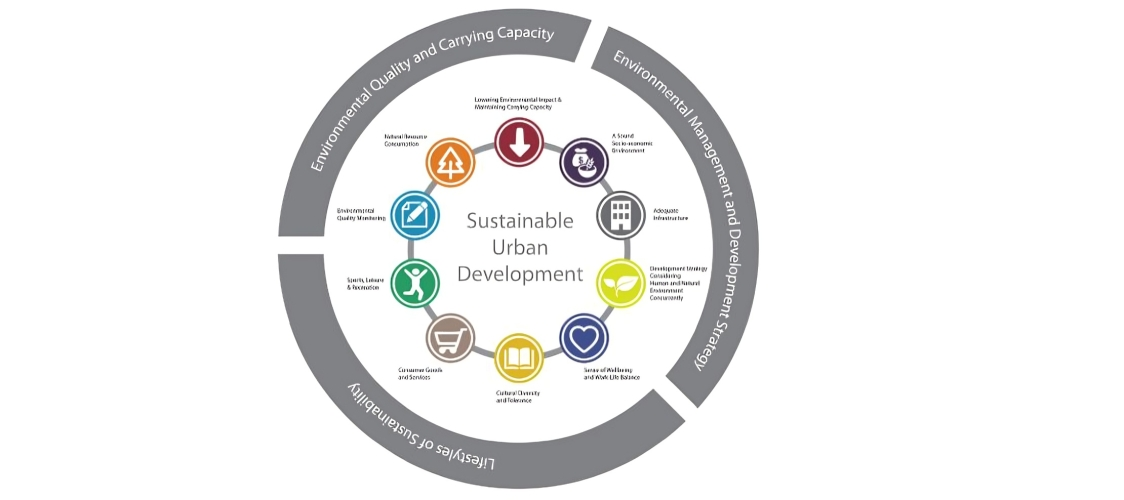
Cover Image: Sustainable Urban Development Framework; Source: Tang and Lee, 2016
INSIGHT July 20, 2024
Exploring Urban & Building Physics: Pioneering Sustainable Urban Development
In the quest for sustainable urban development, the disciplines of urban and building physics play a pivotal role. These fields, which merge the principles of physics with the built environment, are instrumental in crafting spaces that are energy-efficient, comfortable, and environmentally friendly. This comprehensive exploration delves into the science behind urban and building physics, highlighting their importance in achieving sustainability and enhancing the quality of life within urban settings. Through understanding these principles, we can inspire action toward more sustainable urban development, leveraging the insights provided by these crucial disciplines.
THE SCIENCE OF URBAN & BUILDING PHYSICS
Urban and building physics examine the interactions between buildings, their occupants, and the surrounding environment. This interdisciplinary approach considers various factors, including thermal performance, acoustics, lighting, ventilation, and energy flow, to optimize the built environment for human habitation while minimizing its environmental impact.
One of the primary focuses of building physics is ensuring thermal comfort for occupants while improving the energy efficiency of buildings. This involves designing building envelopes (walls, roofs, and windows) that can effectively control heat transfer, leveraging materials and technologies that insulate against heat loss in colder climates and reduce heat gain in warmer ones. Smart design choices, informed by building physics, can significantly reduce the need for artificial heating and cooling, thereby lowering energy consumption and associated carbon emissions.
ACOUSTIC COMFORTUrban and building physics also address acoustic comfort, studying how sound interacts with the built environment. In urban areas, controlling noise pollution is essential for creating livable spaces. By understanding the principles of acoustics, urban planners and architects can design buildings and urban layouts that minimize noise intrusion, enhancing the well-being of city dwellers.
NATURAL LIGHTING AND VENTILATION
Maximizing natural lighting while controlling solar gain is another crucial aspect of building physics. Properly designed buildings can harness daylight to reduce the need for artificial lighting, saving energy and improving the health and productivity of occupants. Similarly, effective ventilation strategies are vital for maintaining air quality and preventing the buildup of pollutants, contributing to healthier indoor environments.

Turenscape, Deep Form of Designed Nature - Sanya Mangrove Park, Sanya City, China. Image Courtesy of WAF- ArchDaily
Urban physics extends these concepts to the city level, analyzing how buildings interact with each other and the urban environment. This includes studying urban heat islands, wind flow patterns, and the distribution of pollutants to create cities that are not only energy-efficient but also resilient to climate change and conducive to public health.
URBAN HEAT ISLAND MITIGATIONUrban heat islands (UHIs) occur when cities become significantly warmer than their rural surroundings, primarily due to human activities and the prevalence of heat-absorbing surfaces like asphalt and concrete. Urban physics offers strategies to mitigate UHIs, such as increasing green spaces, using reflective building materials, and designing urban layouts that enhance natural ventilation.
WIND FLOW AND AIR QUALITYUnderstanding wind flow patterns within urban environments is crucial for dispersing pollutants and providing natural ventilation. Urban and building physics principles guide the placement and design of buildings to optimize wind flow, reducing reliance on mechanical ventilation systems and improving air quality.
SUSTAINABLE URBAN LAYOUTS
Urban physics informs the design of sustainable urban layouts that prioritize pedestrian-friendly spaces, optimize public transportation networks, and ensure access to green spaces. By considering the physical interactions between the urban environment and its inhabitants, cities can become more livable, resilient, and sustainable.
Embracing the principles of urban and building physics is essential for transitioning to sustainable urban development. This involves a collaborative effort among architects, engineers, urban planners, and policymakers to integrate these principles into every stage of the design and planning process.
Urban and building physics play a critical role in integrating renewable energy sources into the built environment. From solar panels integrated into building designs to wind turbines strategically placed within urban layouts, these disciplines provide the framework for harnessing clean energy efficiently.
ENHANCING RESILIENCE TO CLIMATE CHANGEBy applying the insights of urban and building physics, cities can enhance their resilience to climate change. This includes designing buildings and infrastructures that can withstand extreme weather events and adapting urban layouts to accommodate rising sea levels and increased precipitation.
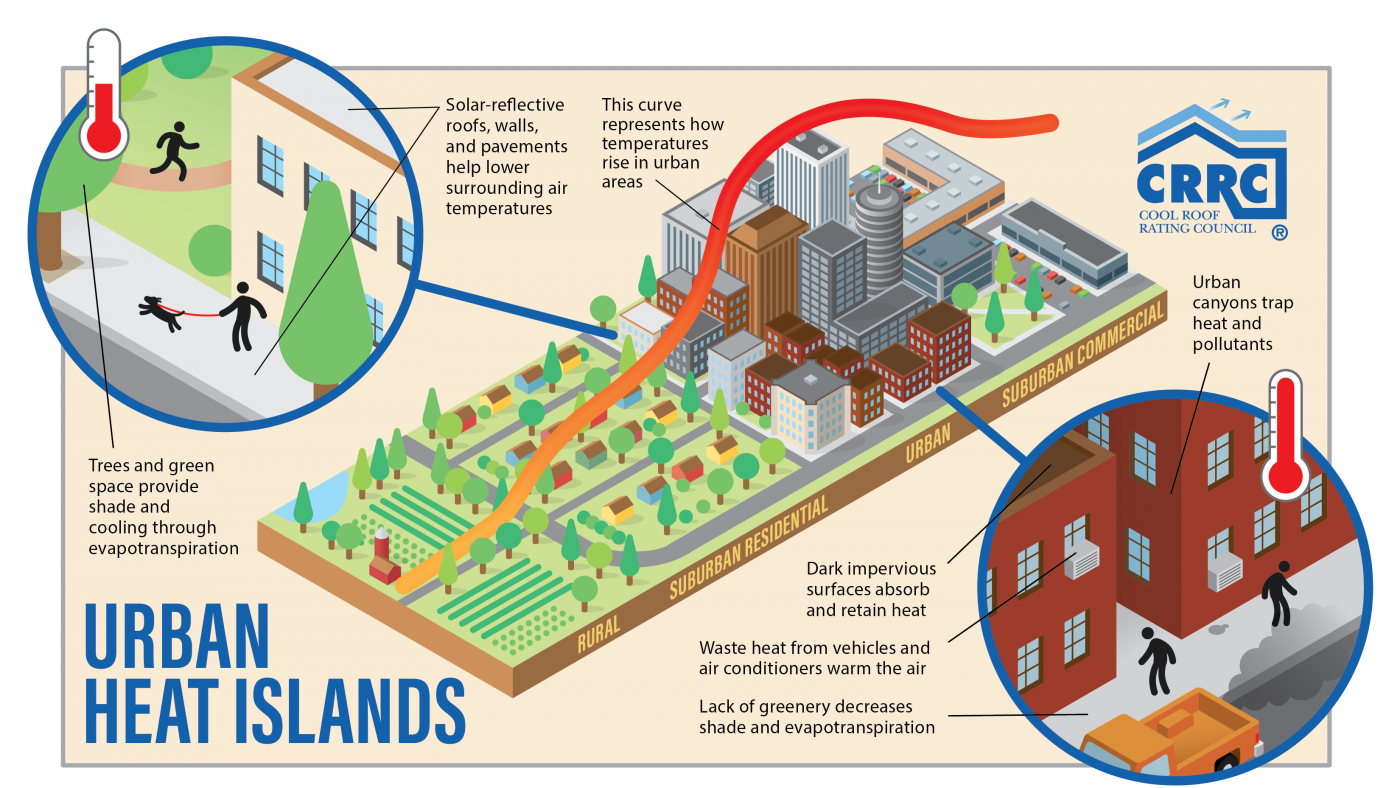
This illustration describes the factors that contribute to urban heat islands (UHI), as well as factors that help mitigate UHI. Urban heat islands occur when the temperature in urban environments is higher than surrounding areas.
High surface temperatures lead to elevated air temperatures, especially at night. Heat islands increase heat-related discomfort, illness, and death. They also cause greater air conditioner use, which increases energy costs and air pollution. Urban heat has a disproportionate impact on disadvantaged communities (HSU et al., 2021; Hoffman et al., 2020; and Wilson, 2020).
Image credit: Cool Roof Rating Council
PROMOTING PUBLIC HEALTH AND WELL-BEING
Sustainable urban development, guided by urban and building physics, significantly contributes to public health and well-being. Creating environments that are thermally comfortable, well-ventilated, acoustically sound, and rich in natural light not only enhances the daily lives of city dwellers but also promotes healthier lifestyles by encouraging walking, cycling, and outdoor activities.
ENCOURAGING COMMUNITY ENGAGEMENT AND EDUCATIONEducating communities about the benefits of sustainable urban development and the principles of urban and building physics fosters greater engagement and participation in sustainability initiatives. Informed citizens are more likely to support and advocate for policies and projects that prioritize environmental responsibility and communal well-being.
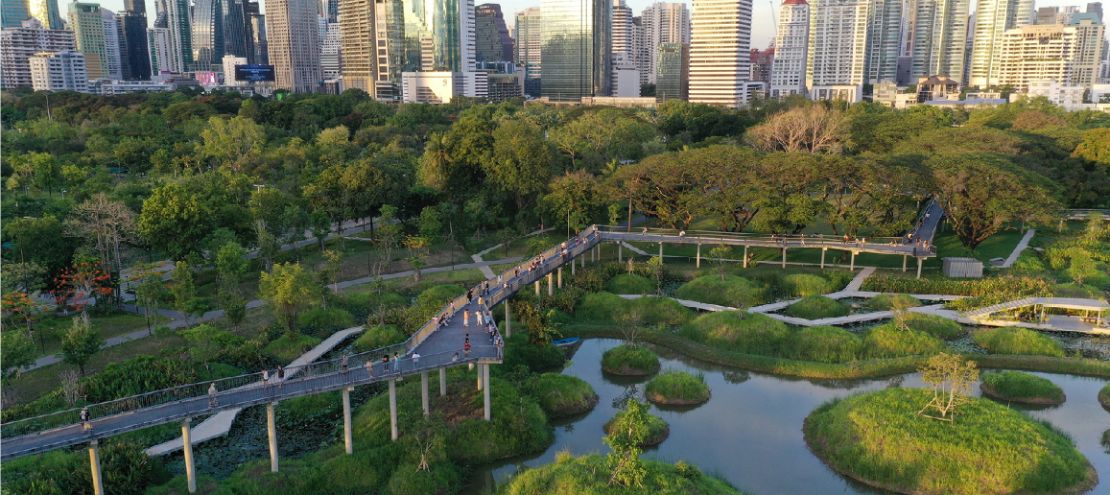
Benjakitti Forest / Turenscape + Arsomslip Community and Environmental Architect. Image © Srirath Somsawat- ArchDaily
The Future Is Now: Taking Action with Urban & Building Physics
The journey towards sustainable urban development is both a challenge and an opportunity. By harnessing the power of urban and building physics, we can design cities that not only minimize their environmental impact but also offer enhanced living conditions for all residents. This future demands a commitment to innovation, interdisciplinary collaboration, and a deep understanding of the complex interactions within urban ecosystems.
How ECOBUILD Can Help?
We specialize in integrating the principles of urban and building physics into sustainable urban development projects.
Our expertise spans thermal comfort analysis, energy-efficient design, acoustic optimization, and the creation of healthy, resilient urban environments.