
How Circular Economy Principles Reduce Construction Waste?
Insight Apr 06, 2025
Introduction: Building a Sustainable Future Through Circularity
The construction industry generates a significant portion of global waste, with traditional "take-make-dispose" practices leading to resource depletion and environmental harm. But what if waste wasn’t the end of the story? Enter the Circular Economy—a model that transforms waste into resources and fosters sustainable growth.
At ECOBUILD, we embrace Circular Economy principles to minimize waste, reduce carbon emissions, and promote resource efficiency in construction. In this blog, we’ll explore how adopting Circular Economy practices is reshaping the industry and driving sustainability.
WHAT IS THE CIRCULAR ECONOMY?
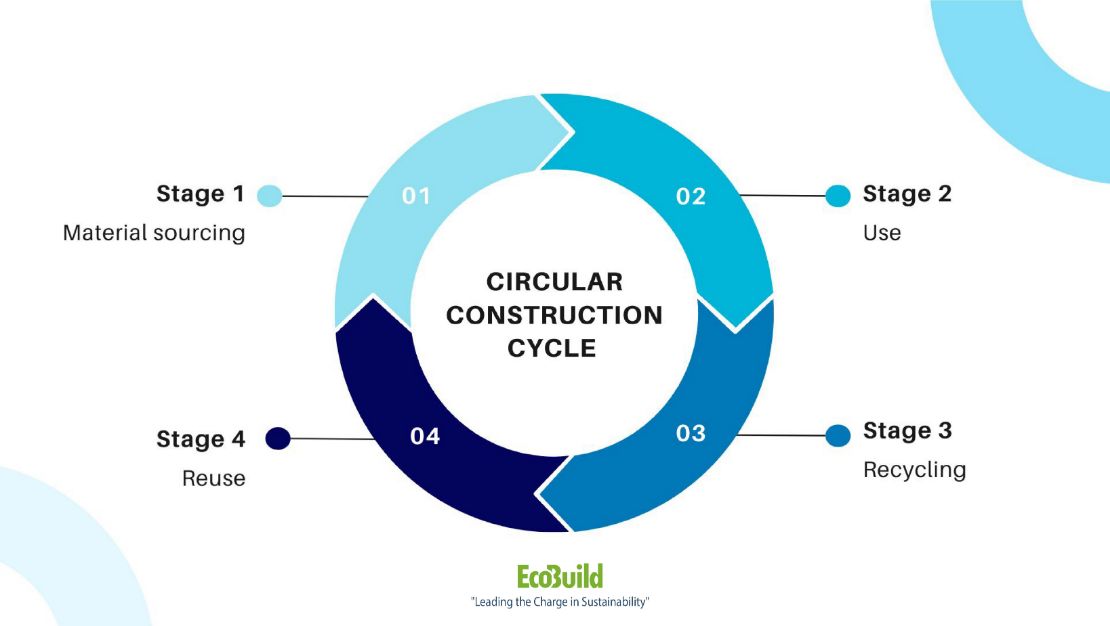
The Circular Economy moves away from linear consumption models by emphasizing:
- Eliminating Waste and Pollution: Designing processes to minimize waste from the start.
- Keeping Products and Materials in Use: Encouraging reuse, repair, and recycling.
- Regenerating Natural Systems: Using renewable resources and promoting ecological restoration.
CIRCULAR ECONOMY PRACTICES IN CONSTRUCTION
1. Designing for Deconstruction (DfD)
- What It Is: Buildings designed to be easily disassembled, allowing materials to be reused or recycled at the end of their life.
- Example: Modular components like timber panels or steel structures that can be repurposed for future projects.
- Impact: Reduces demolition waste by up to 90%.
2. Using Recycled and Reclaimed Materials
- What It Is: Incorporating materials like recycled concrete, reclaimed wood, or steel from decommissioned buildings.
- Example: ECOBUILD’s projects often use recycled steel, which reduces embodied carbon by 25-30% compared to virgin steel.
- Impact: Minimizes resource extraction and diverts waste from landfills.
3. Adopting Circular Supply Chains
- What It Is: Partnering with suppliers who prioritize sustainability, from sourcing renewable materials to creating closed-loop systems.
- Example: Using suppliers that recycle old materials into new construction products, like recycled glass for windows.
- Impact: Reduces material waste and energy use in manufacturing.
4. Extending Building Lifespan
- What It Is: Designing buildings with adaptable layouts and durable materials to extend their functional life.
- Example: ECOBUILD integrates flexible floorplans and high-quality, long-lasting finishes to reduce the need for renovations.
- Impact: Reduces renovation waste and lowers lifecycle carbon emissions.
5. Implementing Construction Waste Management Plans
- What It Is: Strategies to separate, recycle, and repurpose construction debris during the building process.
- Example: On-site sorting of concrete, wood, and metals for recycling.
- Impact: Diverts up to 75% of waste from landfills.
BENEFITS OF CIRCULAR ECONOMY IN CONSTRUCTION
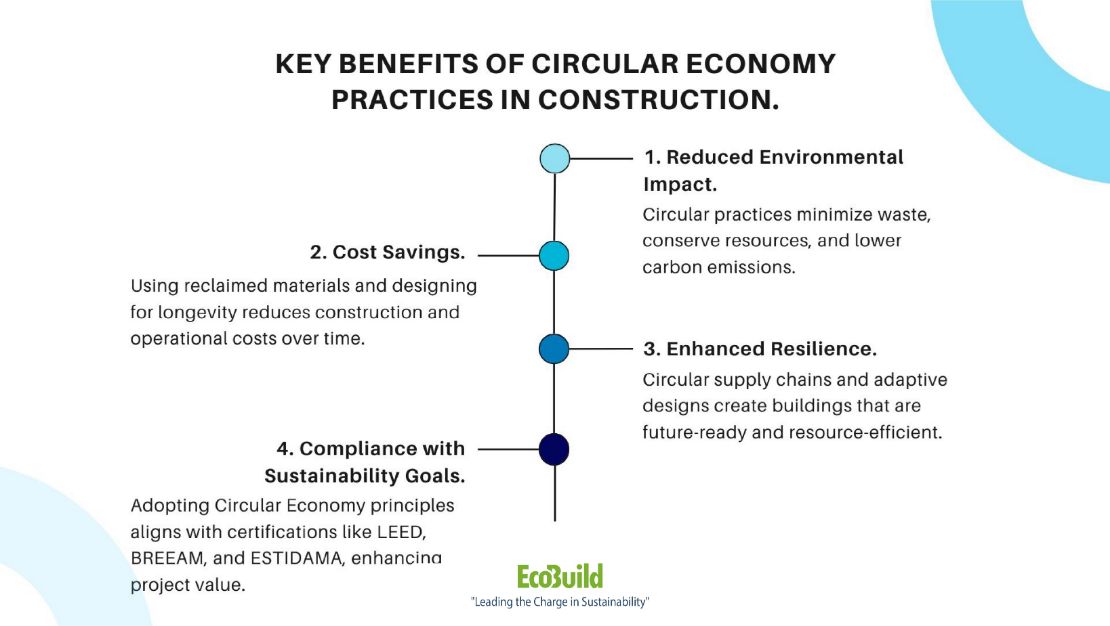
1. Reduced Environmental Impact:
Circular practices minimize waste, conserve resources, and lower carbon emissions.
2. Cost Savings:
Using reclaimed materials and designing for longevity reduces construction and operational costs over time.
3. Enhanced Resilience:
Circular supply chains and adaptive designs create buildings that are future-ready and resource-efficient.
4. Compliance with Sustainability Goals:
Adopting Circular Economy principles aligns with certifications like LEED, BREEAM, and ESTIDAMA, enhancing project value.
ECOBUILD’S COMMITMENT TO CIRCULARITY
At ECOBUILD, we integrate Circular Economy principles into every project to ensure sustainability at every stage. Our approach includes:
- Conducting Material Lifecycle Assessments to identify opportunities for reuse and recycling.
- Partnering with suppliers committed to closed-loop systems.
- Designing for deconstruction and adaptability to ensure long-term resource efficiency.
CASE STUDY: CIRCULAR ECONOMY IN ACTION
In a recent project, ECOBUILD implemented Circular Economy practices by:
- Using recycled concrete for foundations, reducing embodied carbon by 20%.
- Installing modular steel components, enabling future disassembly and reuse.
- Diverting 80% of construction waste from landfills through a comprehensive waste management plan.
The result? A sustainable building that aligned with Net Zero goals and minimized environmental impact.
Conclusion: Closing the Loop in Construction
The Circular Economy isn’t just a concept—it’s a practical, impactful approach to reducing waste and creating sustainable buildings. By prioritizing resource efficiency, adaptability, and innovation, we can transform the construction industry into a model of sustainability.
💡 Ready to embrace Circular Economy principles in your next project? Contact ECOBUILD today to learn how we can help.