

INSIGHT OCT 14, 2024
Innovating Waste Management Through Engineering and Design
In the contemporary world, the escalating volume of waste generated by urban populations presents a formidable challenge, with significant implications for environmental health, sustainability, and public well-being. Traditional waste management practices, often reliant on linear models of consumption and disposal, are increasingly inadequate in addressing these challenges. However, through the lens of engineering and design, innovative solutions are emerging, transforming waste management into a more sustainable, efficient, and community-inclusive endeavor. This article explores the transformative potential of waste engineering and design, underscoring the importance of innovation, community engagement, and sustainability in reshaping waste management practices for the better.
The Paradigm Shift in Waste Management
The paradigm shift from linear to circular waste management models marks a critical step towards sustainability. This transition, underpinned by advancements in engineering and design, focuses on minimizing waste, maximizing resource recovery, and fostering the reuse and recycling of materials. By integrating innovative waste processing technologies and thoughtful design strategies, it's possible to significantly reduce the environmental footprint of waste management.
Engineering Innovations in Waste Processing
Engineering innovations play a pivotal role in modernizing waste management systems. Technologies such as anaerobic digestion for organic waste, advanced recycling techniques for plastics and electronics, and thermal treatment processes for non-recyclable waste, are revolutionizing how materials are processed. These technologies not only enhance the efficiency of waste management but also contribute to energy production, resource recovery, and the reduction of landfill use.
Designing for Zero Waste
The principles of zero waste are increasingly influencing product design and urban planning. By adopting design strategies that anticipate the end-of-life of products and materials, designers and engineers can significantly reduce waste generation. This includes designing products for durability, reparability, and recyclability, as well as implementing urban designs that facilitate waste separation, collection, and recycling. Innovative packaging solutions that minimize material use or utilize biodegradable materials also contribute to waste reduction efforts.
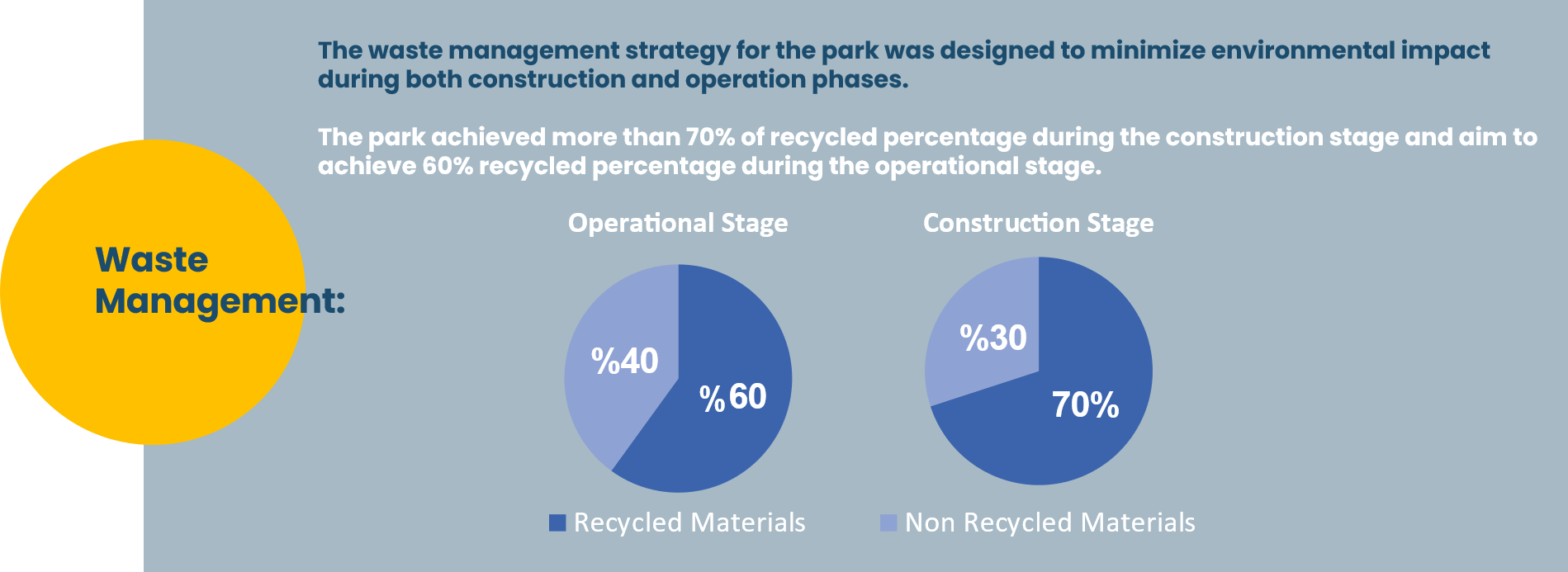
Sample of waste management strategy results from one of ECOBUILD's projects in Masdar City
The Role of Community Engagement
Successful waste management initiatives are rooted in strong community engagement. Educating and involving local communities in waste reduction and recycling efforts is crucial for the adoption of sustainable waste management practices. Community-based programs can encourage participation in recycling, composting, and waste reduction activities, fostering a collective sense of responsibility towards environmental stewardship.
Participatory Design and Planning
Engaging communities in the design and planning of waste management systems ensures that solutions are tailored to local needs and conditions. Participatory design processes can help identify community priorities, leverage local knowledge, and build support for new initiatives. This approach can lead to the development of more accessible and user-friendly waste collection and recycling facilities, increasing community participation and compliance.
Raising Awareness Through Education
Education plays a key role in changing waste management behaviors. Informative campaigns, workshops, and school programs can raise awareness about the environmental impacts of waste and the importance of recycling and waste reduction. By fostering a culture of sustainability, educational efforts can inspire long-term changes in attitudes and behaviors towards waste.
Sustainability and Environmental Impact
Innovations in waste engineering and design are deeply intertwined with the goal of sustainability. By reducing waste generation, enhancing resource recovery, and minimizing the environmental impacts of disposal, these innovations contribute to the conservation of natural resources and the protection of ecosystems.
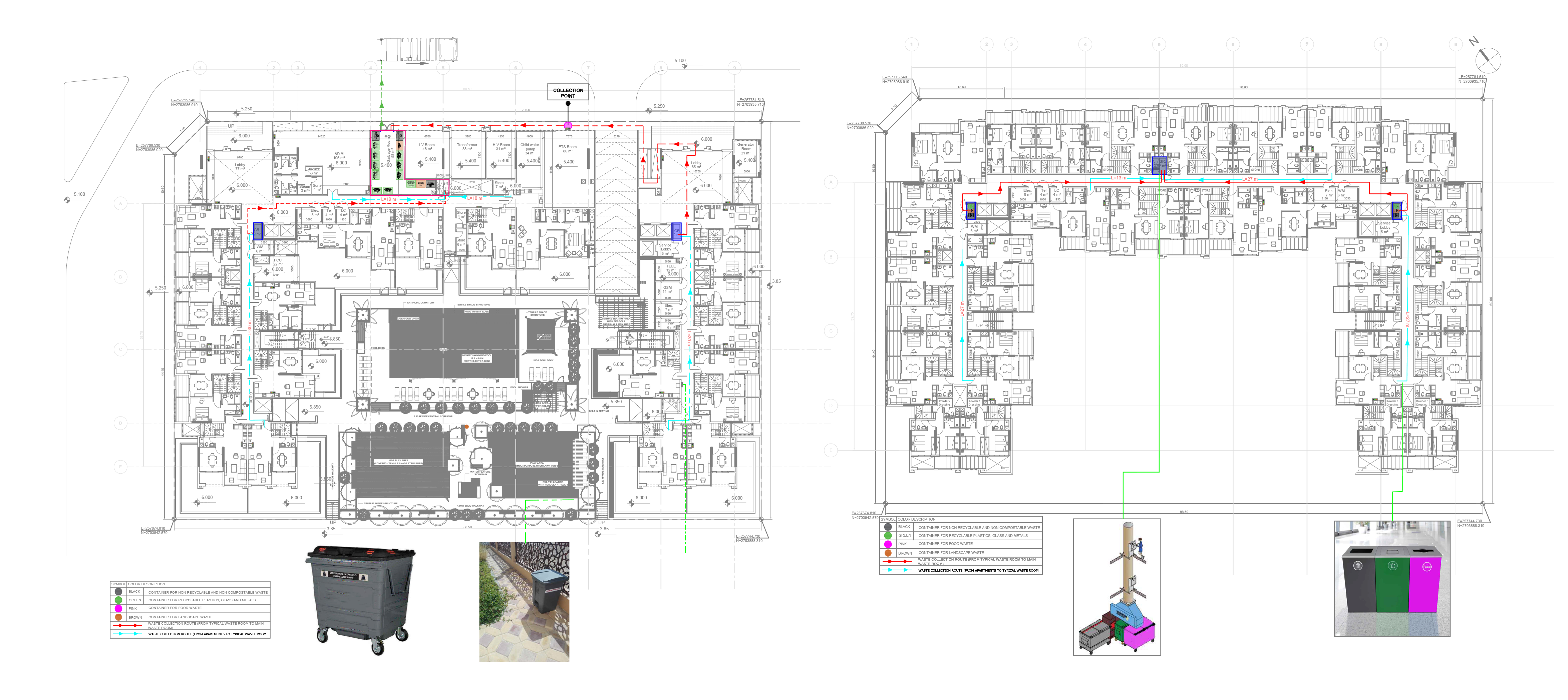
Sample of waste management plan for the building's landscape as well as one of the building's floors @ECOBUILD
Life Cycle Assessment (LCA)
Life Cycle Assessment (LCA) is a valuable tool in evaluating the environmental impacts of waste management strategies. By assessing the environmental footprint of products and materials throughout their life cycle, LCA informs the development of more sustainable waste management solutions. This holistic perspective enables the identification of areas where engineering and design interventions can make the most significant environmental impact.
The Circular Economy
The principles of the circular economy are fundamental to sustainable waste management. By designing systems and products that keep materials in use for as long as possible, the circular economy minimizes waste and promotes the regeneration of natural systems. Innovations in waste engineering and design are critical in transitioning towards circular economic models, offering pathways to a more sustainable and resilient future.
Conclusion: Towards a Sustainable Future in Waste Management
The challenges posed by waste management in the 21st century call for innovative solutions that transcend traditional approaches. Through the integration of engineering innovations, thoughtful design, community engagement, and
a commitment to sustainability, we can transform waste management into a system that not only addresses environmental concerns but also enhances societal well-being. By reimagining waste as a resource rather than a burden, we open up new possibilities for efficiency, innovation, and circularity in our urban environments.
Innovations in waste engineering and design offer a hopeful vision for the future, one where waste is minimized, resources are recovered, and the environmental impacts of our consumption patterns are significantly reduced. As we continue to push the boundaries of what is possible in waste management, the role of technology, creativity, and community collaboration will be paramount in shaping sustainable practices that can be adopted globally.
How ECOBUILD Can Help?
At ECOBUILD, we are dedicated to pioneering sustainable solutions in the built environment, including innovative approaches to waste management. Our expertise in engineering and design enables us to assist clients in implementing efficient, sustainable waste management systems tailored to their specific needs. From waste reduction strategies and recycling programs to the integration of advanced waste processing technologies, ECOBUILD is your partner in achieving sustainability and resilience in waste management. Let us collaborate to create a future where waste is a valuable resource, contributing to the health and prosperity of our communities and the planet.