
Innovative Green Building Materials to Watch in 2025
Introduction: Building Sustainably with Innovation
The construction industry is at the forefront of combating climate change, and one of the most impactful ways to drive sustainability is through the use of innovative green building materials. These materials not only lower embodied carbon but also enhance energy efficiency, reduce waste, and align with Net Zero goals.
At ECOBUILD, we prioritize the integration of cutting-edge materials in our projects to create sustainable, future-ready spaces. In this blog, we highlight the most promising green building materials to watch in 2025 and their potential to revolutionize construction.
WHY GREEN BUILDING MATERIALS MATTER
- Lower Embodied Carbon: Many traditional materials, like concrete and steel, are carbon-intensive. Green alternatives significantly reduce emissions.
- Resource Efficiency: Recycled and renewable materials minimize waste and conserve natural resources.
- Improved Performance: Advanced materials enhance insulation, durability, and energy efficiency, reducing operational costs.
TOP GREEN BUILDING MATERIALS FOR 2025
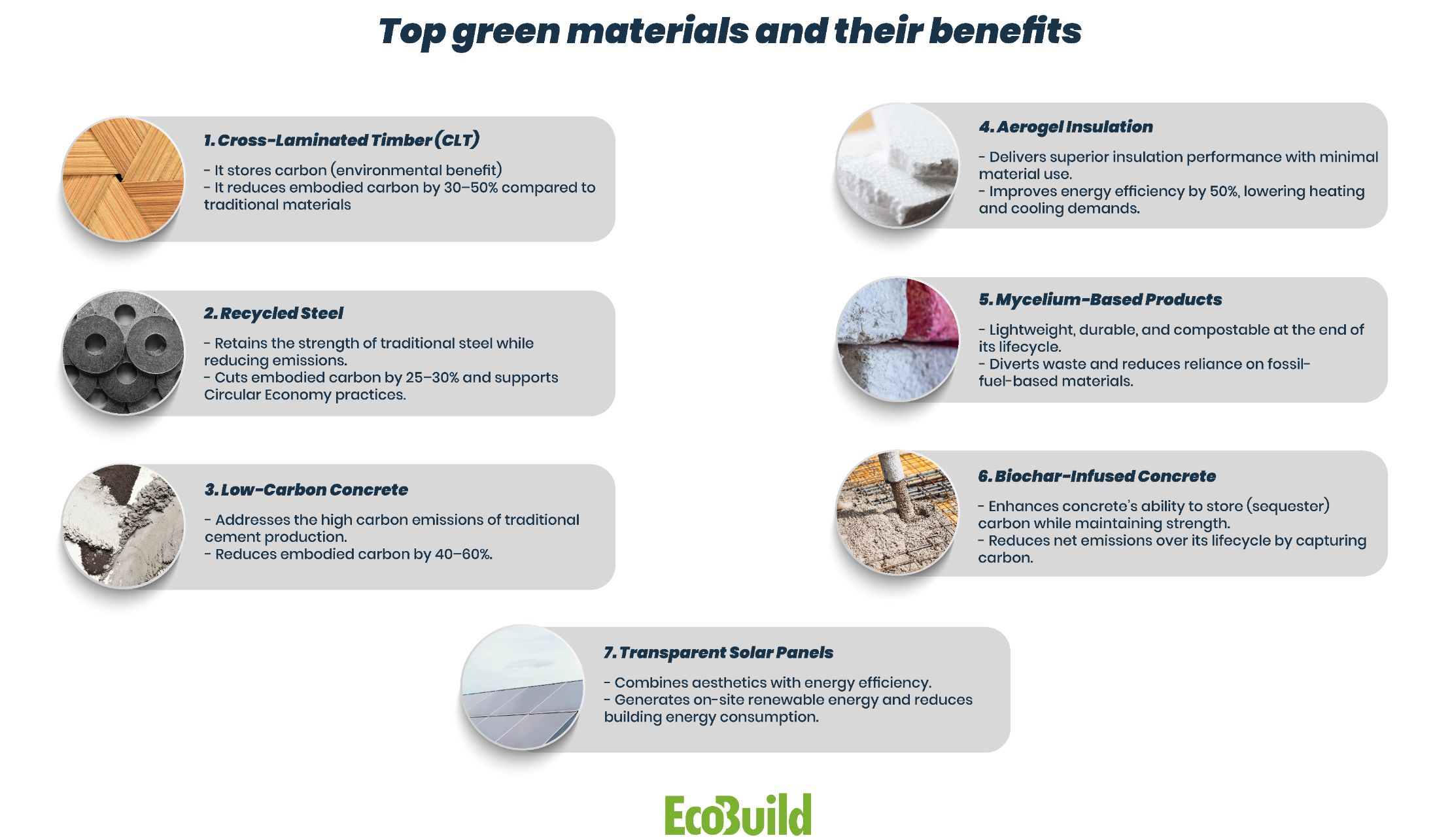
- What It Is: A renewable, engineered wood product made from layers of solid wood panels glued together.
- Why It’s Innovative: CLT stores carbon rather than emitting it, making it a carbon-negative material.
- Example Use: Mid-rise buildings and modular construction projects.
- Impact: Reduces embodied carbon by 30-50% compared to steel and concrete.
- What It Is: Steel manufactured from scrap metal, requiring significantly less energy than virgin steel production.
- Why It’s Innovative: Retains the strength of traditional steel while reducing emissions.
- Example Use: Structural frames for high-rise buildings and bridges.
- Impact: Cuts embodied carbon by 25-30% and supports Circular Economy practices.
- What It Is: Concrete with reduced cement content, often replaced with industrial by-products like fly ash or slag.
- Why It’s Innovative: Addresses the high carbon emissions of traditional cement production.
- Example Use: Foundations, pavements, and precast elements.
- Impact: Reduces embodied carbon by 40-60%.
- What It Is: A lightweight, highly porous material with exceptional thermal insulation properties.
- Why It’s Innovative: Delivers superior insulation performance with minimal material use.
- Example Use: Energy-efficient walls, roofs, and windows.
- Impact: Improves energy efficiency by 50%, lowering heating and cooling demands.
- What It Is: Biodegradable building materials grown from fungi, offering a renewable alternative to traditional composites.
- Why It’s Innovative: Lightweight, durable, and compostable at the end of its lifecycle.
- Example Use: Insulation panels, furniture, and decorative finishes.
- Impact: Diverts waste and reduces reliance on fossil-fuel-derived materials.
- What It Is: Concrete infused with biochar, a carbon-rich material produced from biomass.
- Why It’s Innovative: Enhances concrete’s carbon sequestration properties while maintaining strength.
- Example Use: Infrastructure projects like roads and bridges.
- Impact: Sequesters carbon during its lifecycle, reducing net emissions.
- What It Is: Solar panels that double as windows, allowing light transmission while generating electricity.
- Why It’s Innovative: Combines aesthetics with energy efficiency.
- Example Use: Skyscrapers, residential windows, and facades.
- Impact: Provides on-site renewable energy while reducing building energy consumption.
CHALLENGES AND OPPORTUNITIES:
Challenges:
- Cost Barriers: Some green materials have higher upfront costs compared to traditional alternatives.
- Supply Chain Limitations: Availability of innovative materials may vary by region.
Opportunities:
- Scaling Production: Increased demand is driving advancements and cost reductions for green materials.
- Regulatory Support: Incentives and certifications are encouraging the adoption of sustainable materials.
Conclusion: The Future of Green Building Materials
💡 Ready to integrate green building materials into your projects? Contact ECOBUILD today to explore sustainable solutions tailored to your needs.