
The Future of Net Zero Cities: Challenges and Opportunities
Introduction: The Urgent Need for Net Zero Cities
As urban areas grow and climate change accelerates, the concept of Net Zero cities is emerging as a vital solution to address global sustainability challenges. Net Zero cities aim to eliminate greenhouse gas emissions by balancing carbon output with carbon removal, creating a sustainable, resilient future for urban areas.
At ECOBUILD, we believe that achieving Net Zero cities is possible with a combination of innovative technologies, collaborative planning, and forward-thinking policies. In this blog, we explore the advancements driving Net Zero cities, the challenges they face, and actionable strategies for urban planners to lead the transition.
WHAT ARE NET ZERO CITIES?
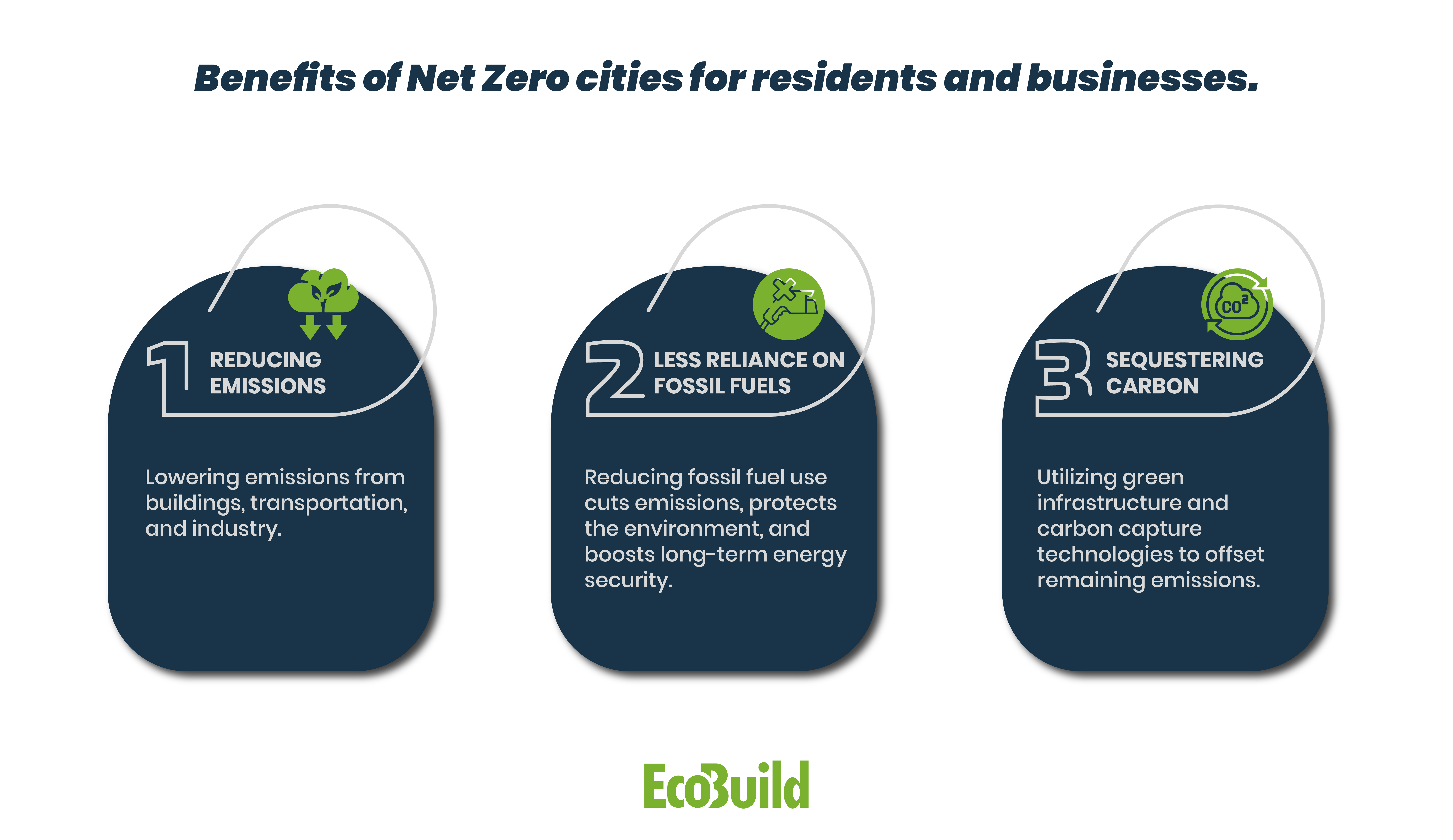
Net Zero cities are urban areas that achieve carbon neutrality by:
- Reducing Emissions: Lowering emissions from buildings, transportation, and industry.
- Adopting Renewables: Powering operations with solar, wind, and other renewable sources.
- Sequestering Carbon: Utilizing green infrastructure and carbon capture technologies to offset remaining emissions.
ADVANCEMENTS SUPPORTING NET ZERO CITIES
1. Renewable Energy Integration
- How It Helps: Solar, wind, and geothermal systems power buildings and public infrastructure, reducing reliance on fossil fuels.
- Example: Copenhagen generates over 50% of its electricity from wind energy.
- Impact: Supports energy independence and reduces carbon footprints.
2. Smart City Technologies
- How It Helps: IoT sensors, AI, and smart grids optimize energy use, water management, and transportation.
- Example: Barcelona’s smart traffic systems reduce emissions by 20% through real-time congestion management.
- Impact: Enhances efficiency and minimizes resource waste.
3. Circular Economy Practices
- How It Helps: Reusing and recycling materials reduce construction and industrial waste.
- Example: Amsterdam’s Circular Economy initiatives aim to cut resource use by 50% by 2030.
- Impact: Minimizes landfill contributions and preserves natural resources.
4. Green Infrastructure
- How It Helps: Urban forests, green roofs, and rain gardens absorb carbon and mitigate heat island effects.
- Example: Singapore’s green corridors connect nature and city, reducing urban temperatures by 2–3°C.
- Impact: Improves air quality and enhances resilience to climate challenges.
CHALLENGES IN ACHIEVING NET ZERO CITIES
1. Infrastructure Upgrades
- Issue: Many cities lack the infrastructure to support renewable energy, electric vehicles, and smart grids.
- Solution: Invest in scalable, future-proof systems that integrate seamlessly into existing urban landscapes.
2. High Upfront Costs
- Issue: Transitioning to Net Zero requires significant financial investments in technology and infrastructure.
- Solution: Leverage public-private partnerships, government incentives, and green financing to offset costs.
3. Regulatory and Policy Barriers
- Issue: Inconsistent policies and regulations hinder progress toward Net Zero goals.
- Solution: Develop clear, unified policies that incentivize sustainable development and penalize emissions-heavy practices.
4. Social and Economic Equity
- Issue: Ensuring Net Zero benefits are accessible to all urban residents, including underserved communities, is essential.
- Solution: Implement inclusive policies that prioritize affordability and equitable access to green technologies.
OPPORTUNITIES FOR URBAN PLANNERS
1. Foster Collaboration
- Engage governments, private sectors, and communities in co-developing Net Zero strategies.
- Use AI and IoT data to identify inefficiencies and optimize resource use.
- Test innovative solutions like microgrids or shared mobility hubs in select neighborhoods before citywide rollouts.
- Educate residents and businesses on the benefits of energy conservation and sustainable practices.
Conclusion: Building Net Zero Cities for the Future
The journey to Net Zero cities is challenging but achievable. By leveraging advancements in technology, adopting sustainable policies, and prioritizing community engagement, urban planners can create cities that thrive economically, socially, and environmentally.
💡 Ready to take the first step toward a Net Zero city? Contact ECOBUILD today to tailored solutions for your urban development projects.