
The Role of Smart Cities in Achieving Net Zero
Insight Apr 23, 2025
Introduction: Smart Cities for a Sustainable Future
As the world faces rising urbanization and climate change, the concept of smart cities has emerged as a beacon of hope. Combining technology, innovation, and sustainable urban planning, smart cities are transforming how we live, work, and interact with the environment. A critical aspect of this transformation is their ability to drive progress toward Net Zero goals—reducing greenhouse gas emissions to as close to zero as possible.
At ECOBUILD, we believe smart cities are essential for a sustainable future. In this blog, we explore the role of smart technologies and urban planning strategies in achieving Net Zero and creating cities that are resilient, efficient, and sustainable.
WHAT ARE SMART CITIES?
A smart city leverages technology and data to optimize urban operations, improve quality of life, and minimize environmental impact. Key features include:
- IoT Integration: Real-time data from sensors to monitor and manage resources.
- Smart Energy Systems: Renewable energy and grid optimization to reduce emissions.
- Sustainable Transportation Networks: Efficient public transit and EV infrastructure.
- Green Infrastructure: Integration of natural elements to enhance air quality and biodiversity.
HOW SMART CITIES CONTRIBUTE TO NET ZERO GOALS
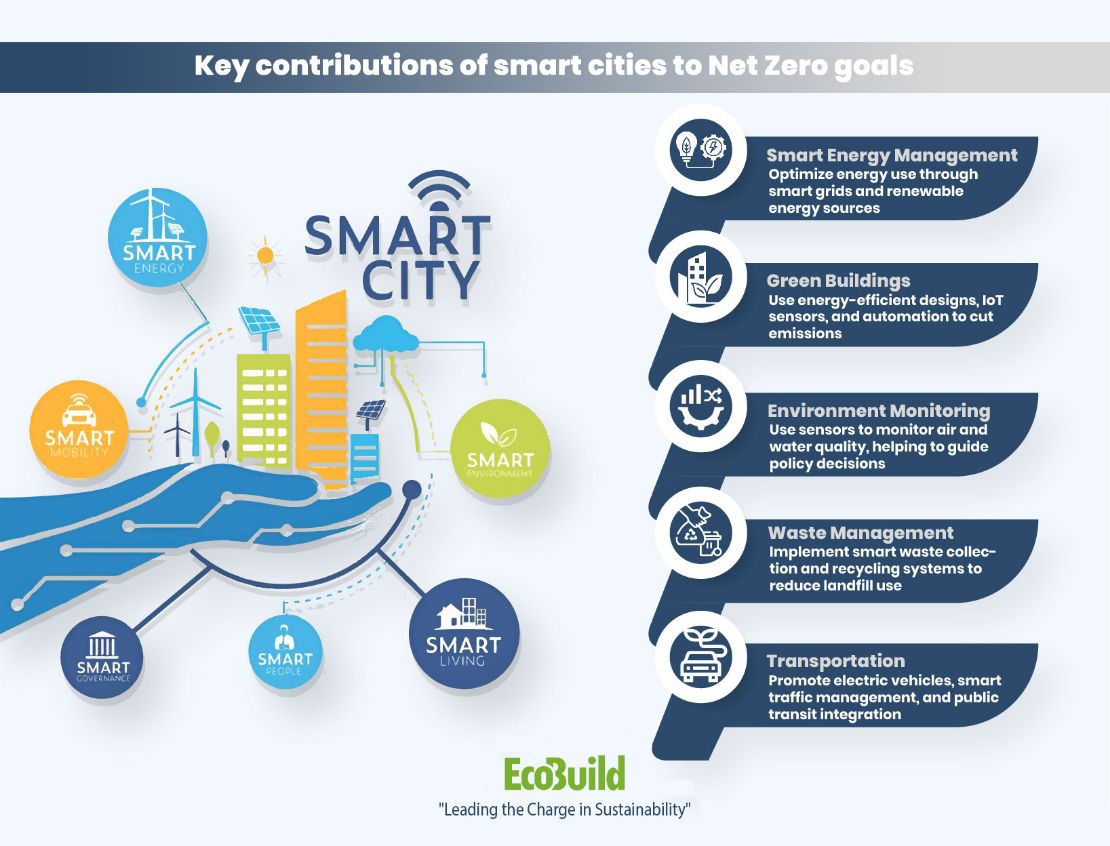
1. Optimizing Energy Efficiency
Smart cities use advanced technologies like IoT and AI to monitor and optimize energy consumption:
- Smart Grids: Balance energy supply and demand, integrating renewable energy sources like solar and wind.
- Building Management Systems: Automatically adjust heating, cooling, and lighting to reduce energy waste.
- Impact: Cities adopting smart energy solutions can reduce energy consumption by 20-30%.
2. Promoting Sustainable Transportation
Transportation is one of the largest contributors to urban emissions. Smart cities address this challenge through:
- Electric Vehicle (EV) Infrastructure: Expanding EV charging networks to support zero-emission mobility.
- Public Transit Optimization: Using AI to improve bus and train schedules, reducing wait times and energy use.
- Active Mobility Solutions: Promoting bike-sharing programs and pedestrian-friendly designs.
- Impact: Shifting to sustainable transportation can lower urban transportation emissions by 40%.
3. Managing Waste Efficiently
Smart waste management systems reduce landfill contributions and promote recycling:
- IoT Sensors: Monitor waste bins to optimize collection routes and reduce fuel consumption.
- Circular Economy Initiatives: Repurpose construction materials and promote reuse across sectors.
- Impact: Smart waste systems can decrease landfill waste by 50% in urban areas.
4. Enhancing Urban Resilience
Smart cities are designed to withstand climate challenges through adaptive and resilient infrastructure:
- Climate Monitoring Systems: Use data to predict and respond to natural disasters like floods or heatwaves.
- Green Infrastructure: Features like green roofs and urban forests reduce urban heat islands and manage stormwater.
- Impact: Climate-resilient designs lower recovery costs and ensure urban systems remain functional during crises.
5. Engaging Citizens for Sustainability
Smart cities empower residents to take part in sustainability efforts through:
- Smart Apps: Provide real-time energy and water usage insights to encourage conservation.
- Community Platforms: Enable participation in local recycling programs or green initiatives.
- Impact: Engaged citizens contribute to achieving Net Zero through collective action and behavioral change
REAL-WORLD EXAMPLES OF SMART CITIES DRIVING NET ZERO
1. Masdar City, UAE
- Features solar farms, energy-efficient buildings, and autonomous electric vehicles.
- Achieved 40% reduction in energy consumption compared to traditional cities.
2. Copenhagen, Denmark
- Integrated smart grids, wind turbines, and green roofs to aim for Net Zero by 2025.
- Reduced CO₂ emissions by 50% since 1995.
3. Singapore
- Uses IoT sensors to optimize traffic and reduce emissions.
- Smart waste systems diverted 60% of waste from landfills.
ECOBUILD’S ROLE IN SMART CITY DEVELOPMENT
At ECOBUILD, we partner with governments, developers, and urban planners to create future-ready cities. Our expertise includes:
- Smart Energy Integration: Designing systems that balance renewable energy use and efficiency.
- IoT Deployment: Implementing real-time monitoring for resource management.
- Sustainable Urban Planning: Creating compact, walkable cities that prioritize green infrastructure.
- Resilience Building: Incorporating adaptive designs to prepare for climate challenges.
Conclusion: Building Smarter for a Net Zero Future
Smart cities are not just an ideal—they’re a necessity for achieving Net Zero goals and creating sustainable communities. By leveraging technology, innovation, and smart planning, we can build cities that are not only efficient but also resilient and environmentally responsible.
💡 Let’s design the cities of the future, today. Contact ECOBUILD to learn how we can help you create smarter, greener urban environments.